
Body Mass Index
BMI (Body Mass Index) is a calculation that uses your height and weight to estimate whether your body weight falls within certain population-based categories.
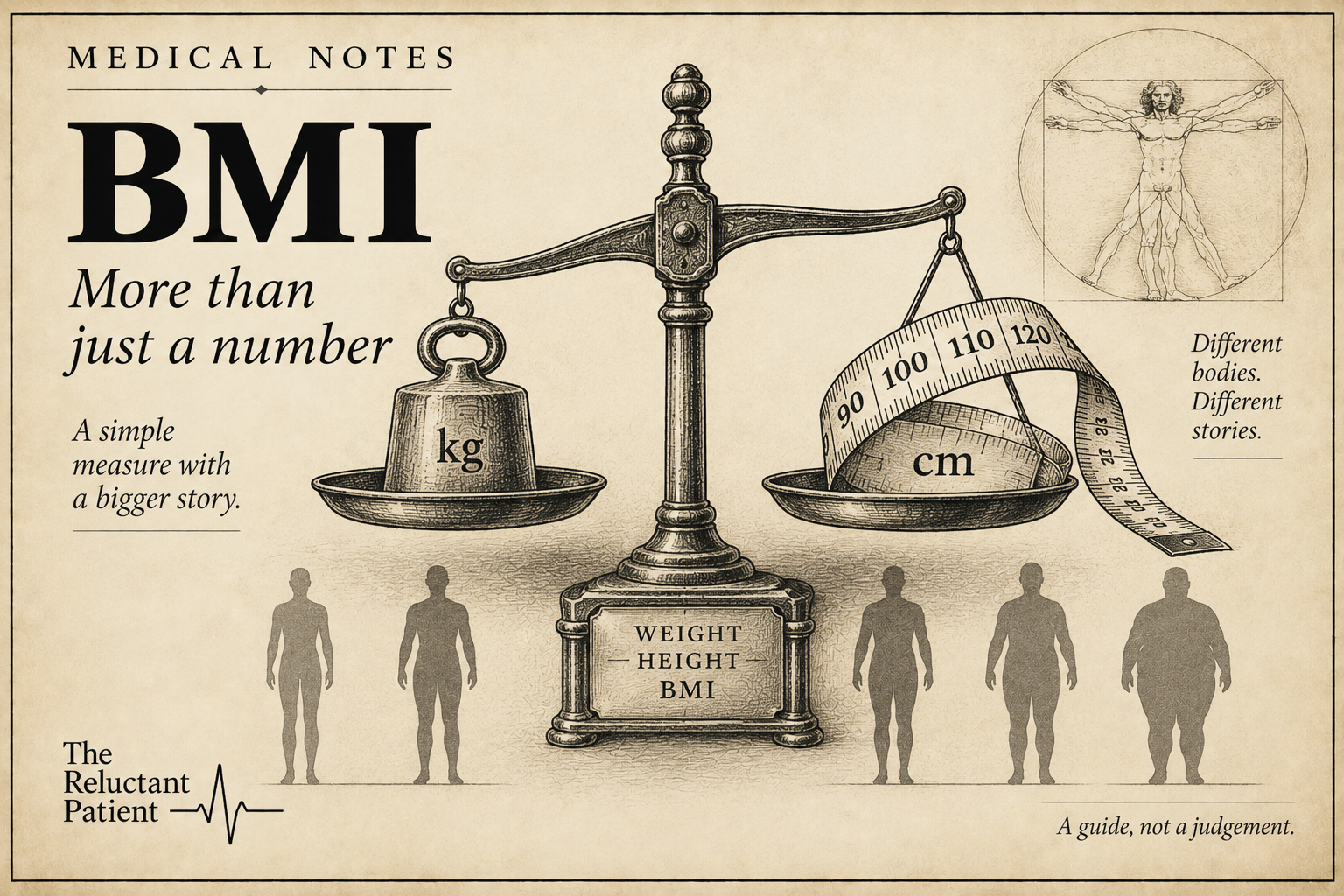
It is calculated as:
weight (kg) ÷ height (m²)
In the UK, BMI categories for adults are generally:-
- Below 18.5 – Underweight
- 18.5 to 24.9 – Healthy weight
- 25 to 29.9 – Overweight
- 30 and above – Obese
It is used in NHS assessments, GP appointments, and health check programmes as a screening tool.
However, it can be misleading as it doesn’t differentiate between muscle and body fat:-
- Muscular people can have a high BMI
- Slim-looking people can have an elevated BMI
- It doesn’t account for body composition
It can influence:-
- Whether you’re offered weight-management support
- Surgical eligibility
- Risk discussions
But it rarely comes with much explanation about its limitations.
For a reluctant patient, that’s where frustration can creep in – the number carries weight (no pun intended), but the nuance often doesn’t.
BMI is useful at a population level. It helps health services identify trends and risks across large groups of people.
But at an individual level, it is:-
- A starting point
- Not a full health assessment
- One indicator among many
It does not measure:-
- Muscle mass
- Fat distribution
- Fitness
- Diet quality
- Mental health
- Metabolic markers
It’s a screening tool – not a complete picture.
From the Case Files

4.0.0 The MoT
A routine health check, a phone call in the park and a diagnosis I really wasn’t expecting. Apparently registering with a GP has consequences.